 susan@shin-yua.com
 My inquiry
 My Account
 Upload BOM
What Is a Microcontroller?
How Do IC Chips Work in Microcontrollers
Basic Working Principle of IC Chips
Before understanding how a microcontroller works, it is important to first understand how programming language interacts with hardware and software. Integrated circuits (IC chips) like microcontrollers (MCUs) are vital in modern electronics. This function is essential for a processor to operate effectively in embedded systems, ensuring proper connectivity and communication. microcontroller An MCU is essentially a type of IC designed to integrate processing, memory, and peripherals into a single chip. At the most fundamental level, IC chips operate through the interaction of transistors, which act as tiny electronic switches controlling the flow of electrical signals.
How Transistors Work Inside IC Chips
These transistors process binary data in the form of 0s and 1s, enabling logic operations and data handling. By combining millions or billions of transistors, IC chips can execute complex instructions, often programmed in assembly language. In microcontrollers, this capability is optimized for control tasks rather than high-end computation.
How Microcontrollers Process Signals
Within a microcontroller, signals enter through input pins, are processed by the internal CPU based on programmed instructions, and then produce outputs to control external devices, acting as a controller. This closed-loop processing is what makes microcontrollers highly efficient in embedded systems, particularly in IoT devices.
What Are the Main Components of a Microcontroller
CPU, Memory, and Core Architecture
At its core, a microcontroller contains a CPU responsible for executing instructions and managing system operations, functioning as the primary processor in an ecosystem of interconnected devices. It works closely with memory components such as Flash for program storage and RAM for temporary data handling, forming the computational foundation of the device, similar to how an Arduino operates, especially in IoT devices.
GPIO, ADC, and Communication Interfaces
Microcontrollers include integrated peripherals such as GPIO for digital control, ADC for analog signal conversion, and communication interfaces like UART, SPI, and I2C. These features allow the chip to interact directly with sensors, modules, and other systems without requiring many external components.
Internal Integration of Microcontrollers
This high level of integration is what differentiates microcontrollers from other ICs. By embedding processing, memory, and I/O into a single chip, system complexity is reduced while reliability and efficiency are improved, especially in low-power applications.
Types of Microcontrollers and Their Applications
8-bit, 16-bit, and 32-bit Microcontrollers
Microcontrollers are typically categorized by data width, such as 8-bit, 16-bit, or 32-bit MCUs. 8-bit microcontrollers are used for simple control tasks, while 16-bit options offer moderate performance. 32-bit microcontrollers like the STM32 provide higher processing capability and are widely used in modern embedded systems, including robotics and IoT devices.
Microcontroller Applications in Embedded Systems
Microcontrollers are central to embedded systems, where they perform dedicated functions such as monitoring inputs, controlling outputs, and executing predefined logic. These systems often run continuously and require stable, efficient operation.
Industrial and Consumer Use Cases
In industrial environments, microcontrollers are used in automation and control systems, enhancing connectivity and efficiency through the use of ethernet protocols. In consumer electronics, they are found in devices such as home appliances, wearables, and smart devices, where compact integration and low power consumption are essential.
Microcontroller vs Microprocessor
Differences Between Microcontroller and Microprocessor
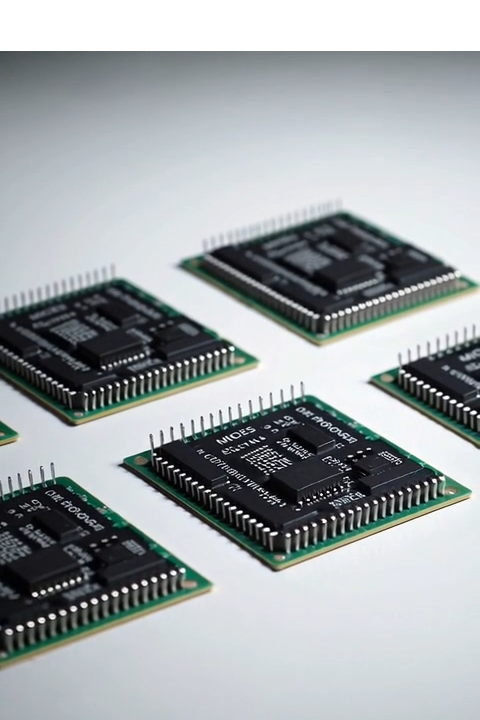
A microcontroller integrates CPU, memory, and peripherals into a single microchip, enhancing system efficiency. A single MCU can serve multiple purposes in a compact form factor, particularly in robotics applications., while a microprocessor typically includes only the CPU and depends on external components. This makes microcontrollers more compact and suitable for dedicated tasks, particularly in low-power applications.
When to Use a Microcontroller vs Microprocessor
Microcontrollers (MCUs) are preferred in embedded applications that require real-time control and efficiency, especially in prototypes. Microprocessors are more suitable for general-purpose computing where flexibility and high processing power are needed.
Performance and System Design Considerations
From a system design perspective, microcontrollers reduce hardware complexity and cost, while microprocessors offer scalability and performance, especially in IoT ecosystems that often involve multiple programming languages. The choice depends on application requirements and system architecture, particularly when deciding between a microcontroller for embedded systems or a microprocessor.
How to Choose a Microcontroller
Key Factors in Microcontroller Selection
Choosing a microcontroller requires evaluating processing performance, memory size, and peripheral requirements, which are critical for the intended prototype in the context of an embedded microcontroller. These factors must align with the functional needs of the application, whether it involves simple control logic or more complex real-time processing. Compatibility with existing system architecture is also critical, especially in designs that require stable long-term operation in embedded microcontroller applications.
Low Power Microcontroller Selection Guide
For battery-powered or energy-sensitive designs, low-power consumption becomes a key consideration. Low power microcontrollers are designed to operate efficiently under constrained energy conditions, making them suitable for portable devices, IoT applications, and remote monitoring systems where power availability is limited.
Availability and Supply Chain Considerations
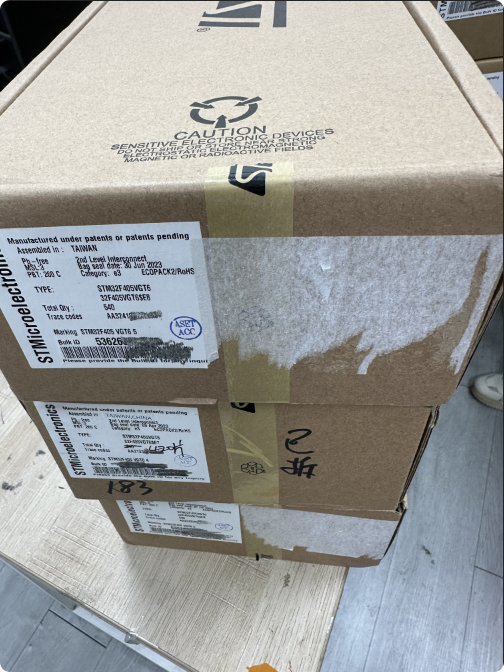
Beyond technical specifications, availability and lifecycle status are often overlooked but equally important in the context of embedded microcontroller solutions. Component shortages, long lead times, or unexpected discontinuation can significantly impact production timelines. In practice, many sourcing decisions for MCUs are influenced as much by supply stability as by performance, especially when considering the operating system they will run.
Working with experienced global distributors such as microchip manufacturers can enhance supply chain efficiency for microcontrollers and their associated programming languages. ShinYua Connectivity solutions can improve visibility into component availability across different regions and channels for microcontrollers. This makes it easier to identify in-stock options, evaluate alternative parts, and reduce the risk associated with single-source dependencies in the microchip supply chain, particularly for analog-to-digital converters. In fast-moving supply environments, this level of sourcing flexibility can directly affect both cost control and production continuity, especially for systems relying on ethernet connectivity.
Related Information

- Help you to save your cost and time.

- Reliable package for your goods.

- Fast reliable delivery to save time.

- Quality premium after-sale service.


