 susan@shin-yua.com
 My inquiry
 My Account
 Upload BOM
LR41 Equivalent: Complete Guide to Battery Replacement and Compatibility
The LR41 battery is one of the most commonly used button cells in small electronic devices. Despite its widespread use, many users search for "LR41 equivalent" when looking for replacements, often encountering multiple model numbers that appear unrelated at first glance.
This confusion is mainly caused by differences in naming conventions, manufacturing standards, and battery chemistry. In global supply chains, the same battery may be labeled differently depending on the supplier, region, or even packaging format. As a result, buyers may hesitate when choosing alternatives, especially in bulk procurement scenarios.
Understanding LR41 equivalents is essential not only for ensuring compatibility, but also for improving device performance, reducing failure rates, and optimizing long-term sourcing strategies.
As an electronic components distributor, having a clear understanding of these equivalencies allows both engineers and procurement teams to make more informed and scalable decisions.
What Is an LR41 Battery?
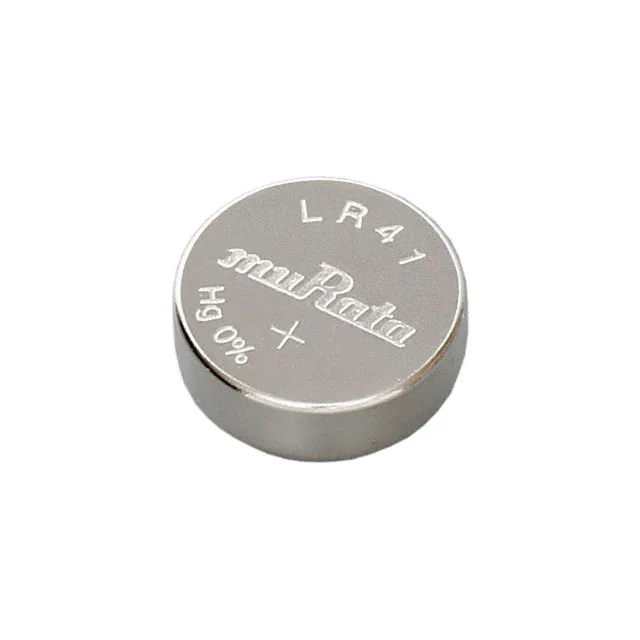
The LR41 is a 1.5V alkaline button cell battery with a compact cylindrical form factor. It typically measures 7.9 mm in diameter and 3.6 mm in height, placing it within a standardized category of miniature coin cells used across various industries.
From a materials perspective, LR41 batteries are based on zinc-manganese dioxide chemistry. This type of chemistry is widely adopted due to its low cost and relatively stable performance under low-drain conditions. However, it is important to understand that "stable" in this context does not mean constant voltage output.
In practical applications, LR41 batteries are used in devices such as digital thermometers, watches, calculators, laser pointers, and handheld testing tools. These devices rely more on compact size and consistent contact than on high current output, which explains the continued relevance of LR41 in modern electronics.
Another important characteristic is that LR41 batteries are primary cells, meaning they are non-rechargeable. Attempting to recharge them can lead to leakage or safety risks, which is a key consideration for both end users and distributors.
Why Are There Multiple LR41 Equivalents?
The presence of multiple LR41 equivalents is primarily the result of overlapping naming systems and market-driven labeling practices.
From a standards perspective, LR41 follows IEC naming conventions, where:
- "L" represents alkaline chemistry
- "R" indicates a round battery
- "41" corresponds to size classification
However, manufacturers often use alternative naming systems. For example, "AG3" is a widely used commercial designation, particularly in Asian markets, while "LR736" reflects dimensional coding.
This leads to a situation where multiple labels coexist for the same physical product. While this increases sourcing flexibility, it also introduces complexity in product identification, especially when dealing with multiple suppliers.
Additionally, the concept of "equivalent" extends beyond naming. It also includes batteries with different internal chemistries-most notably silver oxide variants-which share the same dimensions but differ in performance characteristics.
For formal classification, IEC battery standards provide a reference framework.
Common LR41 Equivalent Models
Alkaline Equivalents
Alkaline equivalents are the most straightforward replacements for LR41. These include AG3, LR736, L736, G3A, and 192. From a physical and electrical standpoint, they are designed to match LR41 specifications closely.
In real-world usage, alkaline equivalents are favored in applications where cost control is critical and performance demands are moderate. Their discharge profile is characterized by a gradual voltage decline, which is acceptable for devices that do not require precise voltage regulation.
However, this same characteristic can become a limitation in devices that rely on consistent voltage. As the battery discharges, the decreasing voltage may lead to dim displays, slower response times, or reduced measurement accuracy.
From a procurement perspective, alkaline batteries dominate due to their lower price and high availability. This makes them a practical choice for large-scale consumer electronics production.
Silver Oxide Equivalents
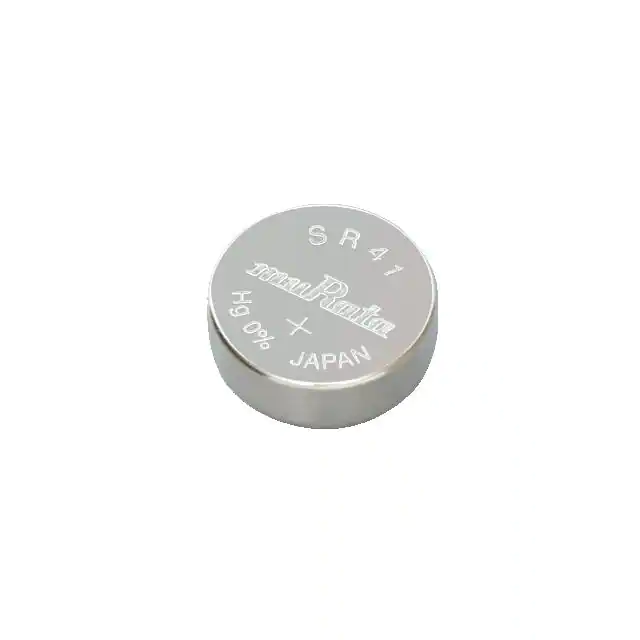
Silver oxide equivalents, such as SR41, 392, and SR736, are often considered premium alternatives to LR41. While they share identical dimensions, their internal chemistry provides significantly different performance characteristics.
Unlike alkaline batteries, silver oxide cells maintain a relatively flat discharge curve. This means that the voltage remains stable for most of the battery's lifespan, only dropping sharply near the end of discharge.
This stability has several practical benefits:
- Improved accuracy in measurement devices
- Consistent brightness in displays
- Reduced risk of device malfunction due to low voltage
For technical specifications and cross-referencing, platforms like Digi-Key can be used as a reliable resource.
Key Differences That Affect Performance
Although LR41 and its equivalents are interchangeable in size, their internal differences can significantly impact device behavior.
The most critical factor is the discharge curve. Alkaline batteries start at around 1.5V and gradually decline, whereas silver oxide batteries maintain approximately 1.55V for most of their lifespan. This difference may seem minor, but it can have noticeable effects in sensitive electronics.
Another factor is leakage risk. Over time, especially under poor storage conditions, alkaline batteries are more prone to leakage. This can damage internal circuits and lead to product failures.
Temperature performance is also worth considering. Silver oxide batteries tend to perform more reliably across a wider temperature range, making them suitable for environments where conditions are less controlled.
From a lifecycle perspective, silver oxide batteries generally offer longer service life, which can offset their higher upfront cost.
How to Choose the Right LR41 Equivalent
Choosing the correct LR41 equivalent requires a balance between cost, performance, and application requirements.
For low-drain consumer devices, alkaline equivalents such as AG3 or LR736 are usually sufficient. They provide acceptable performance at a lower cost and are easy to source in large quantities.
For precision devices, including thermometers and watches, silver oxide batteries such as SR41 or 392 are the preferred choice. Their stable voltage output ensures consistent performance and reduces the likelihood of measurement errors.
In addition to technical factors, buyers should also consider supply chain reliability. Working with reliable component sourcing solutions can help ensure consistent product quality and reduce procurement risks.
Applications of LR41 and Its Equivalents
LR41 batteries and their equivalents are used across a wide range of industries, reflecting their versatility and standardized design.
In medical applications, they power thermometers and diagnostic tools where accuracy is essential. In consumer electronics, they are found in watches, toys, and small handheld devices. In industrial environments, they are used in portable testing equipment and compact measurement tools.
The diversity of these applications highlights the importance of selecting the appropriate equivalent. A battery that works well in a toy may not be suitable for a medical device, even if the size is identical.
For more insights on electronic components, exploring related topics can provide a broader understanding of component selection strategies.
Buying Tips for LR41 Equivalent Batteries
When sourcing LR41 equivalents, especially in bulk, quality control becomes a critical factor.
Buyers should evaluate:
- Manufacturing consistency
- Packaging quality
- Shelf life and storage conditions
- Resistance to leakage
It is also advisable to request samples before placing large orders, particularly when working with new suppliers. This helps verify performance and compatibility in real-world applications.
In terms of sourcing strategy, using targeted search queries such as "LR41 equivalent bulk supplier" or "SR41 392 wholesale battery" can improve efficiency and lead to better supplier matches.
For deeper technical insights into battery materials and performance, Murata provides valuable reference materials.
Frequently Asked Questions
Can LR41 be replaced with SR41?
Yes, SR41 is a compatible replacement and is often preferred due to its more stable voltage and longer lifespan. It is especially suitable for precision devices.
Is AG3 exactly the same as LR41?
AG3 is considered an alkaline equivalent of LR41. While performance may vary slightly depending on manufacturer quality, they are generally interchangeable.
What happens if I use a silver oxide battery instead of alkaline?
In most cases, the device will function normally or even perform better due to improved voltage stability. However, for extremely sensitive circuits, specifications should be verified.
Why do LR41 batteries drain quickly in some devices?
This is often due to the discharge characteristics of alkaline batteries. Devices with higher or inconsistent power demands may cause faster voltage drop.
How long can LR41 batteries be stored?
Shelf life depends on storage conditions, but typically ranges from 2 to 5 years. Silver oxide batteries generally offer longer shelf stability.
Key Takeaways
LR41 equivalents are not simply interchangeable labels, but represent a range of battery types with different performance characteristics and application suitability.
Alkaline models such as AG3 and LR736 provide a cost-effective solution for general use, while silver oxide alternatives such as SR41 and 392 offer superior stability, longer lifespan, and better performance in precision applications.
For engineers, buyers, and distributors, understanding these differences is essential. It allows for better decision-making, improved product reliability, and more efficient sourcing strategies in both consumer and industrial markets.
 >
>
- Part No.:
- SR41
- Manufacturer:
- Murata Electronics
- Category:
- Application Notes
- Package:
- Datasheet:
-
 SR41.pdf
- Description:
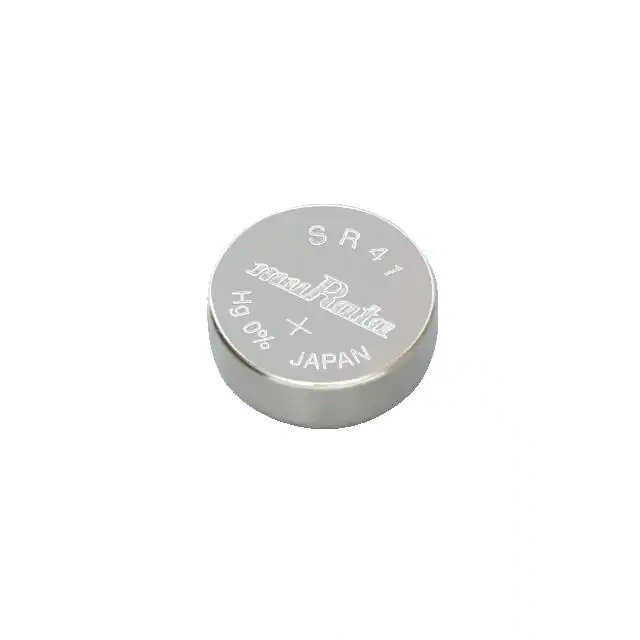
- BATTERY SILV OX 1.55V COIN 7.9MM
- Quantity:
Unit Price:$0
Ext Price:$0
- Payment:

- Shipping:

Product details
- Specifications
- FAQ
- Product Comparison
- Related Categories
- Packaging:
- Box
- Series:
- SR41
- ProductStatus:
- Active
- BatteryChemistry:
- Silver Oxide
- BatteryCellSize:
- Coin, 7.9mm
- Voltage-Rated:
- 1.55 V
- Capacity:
- 45mAh
- Size/Dimension:
- 0.31 Dia x 0.14 H (7.9mm x 3.6mm)
- Category:
- Application Notes
- Datasheet:
-
SR41.pdf
1. How to order SR41 on Shenzhen Shinyua Technology Co., Ltd.?
Currently, Shenzhen Shinyua Technology Co., Ltd. only provide peer-to-peer order processing. While you submit the RFQ, our professional agent will contact you with the competitive prices in the global market, and our agent will prompt you to finish the order if you accept our offers.
2. How does Shenzhen Shinyua Technology Co., Ltd. guarantee that SR41 is from the original manufacturer or authorized agents?
We have a professional and experienced quality control team to strictly verify and test the LR41 Equivalent: Complete Guide to Battery Replacement and Compatibility. All suppliers must pass our qualification reviews before they can publish their products including SR41 on Shenzhen Shinyua Technology Co., Ltd.; we pay more attention to the channels and quality of SR41 products than any other customer. We strictly implement supplier audits, so you can purchase with confidence.
3. Are the SR41 price and inventory displayed accurate?
The price and inventory of SR41 fluctuates frequently and cannot be updated in time, it will be updated periodically within 24 hours. And, our quotation usually expires after 5 days.
4. What forms of payment are accepted?
Wire Transfer, PayPal, Alipay, Wechat, Credit Card, Western Union, MoneyGram, and Escrow are all acceptable.
Warm Tips: Some orders in certain payment forms may require handling fee.
5. How is the shipping arranged?
Customers can choose industry-leading freight companies, including DHL, UPS, FedEx, TNT, and Registered Mail. Shipping insurance is also available.
Once your order has been processed for shipment, our salesperson will send you an email advising you of the shipping status and tracking number.
Warm Tips: It may take up to 24 hours for the carriers to display tracking information. Usually, express delivery takes 3-5 days, and registered mail takes 25-60 days.
6. What is the process for return or replacement of SR41?
All goods will implement Pre-Shipment Inspection (PSI), selected at random from all batches of your order to do a systematic inspection before arranging the shipment. If there is something wrong with the SR41 we delivered, we will accept the replacement or return of the SR41 only when all of the below conditions are fulfilled:
(1)Such as a deficiency in quantity, delivery of wrong items, and apparent external defects (breakage and rust, etc.), and we acknowledge such problems.
(2)We are informed of the defect described above within 90 days after the delivery of SR41.
(3)The PartNo is unused and only in the original unpacked packaging.
Two processes to return the products:
(1)Inform us within 90 days
(2)Obtain Requesting Return Authorizations
7.How to contact us to get technical supports, such as SR41 pin diagram, SR41 datasheet?
If you need any after-sales service, please do not hesitate to contact us.
| Image | |
| Part Number | SR41 |
| Manufacturer | Murata Electronics |
| Packaging | Box |
| Series | SR41 |
| ProductStatus | Active |
| BatteryChemistry | Silver Oxide |
| BatteryCellSize | Coin, 7.9mm |
| Voltage-Rated | 1.55 V |
| Capacity | 45mAh |
| Size/Dimension | 0.31 Dia x 0.14 H (7.9mm x 3.6mm) |
- integrated circuit (ICs)(722936)
- Discrete Semiconductor Products(253071)
- Circuit Protection(300347)
- Inductors, Coils, Chokes(159901)
- Isolators(22491)
- Resistors(1732208)
- Relays(65894)
- Capacitors(965649)
- RF/IF and RFID(73839)
- Audio Products(0)
- Sensors, Transducers(0)
- Industrial Supplies(0)
- Transformers(0)
- Tools(0)
- Test and Measurement(0)
- Tapes, Adhesives, Materials(0)
- Switches(0)
- Anti-Static Control, ESD, Clean Room Products(0)
- Soldering, Desoldering, Rework Products(0)
- Prototyping, Fabrication Products(0)
SR41 Relevant information
- Include Parts
- Popular Search
The following parts include "SR41" in ISSI, Integrated Silicon Solution Inc“LR41 Equivalent: Complete Guide to Battery Replacement and Compatibility”.
- Part Number
- Manufacturer
- Package
- Description
The following parts are popular search parts in Application Notes.
In Stock:3,618
Please send RFQ.we will respond immediately.
-
AFPG804
Panasonic Industrial Automation Sales
-
AFPX-BATT
Panasonic Industrial Automation Sales

-
CR 2032 JAUCH (IB)
Jauch Quartz
-
CR2032
Panasonic - BSG
-
LR6XWA/B
Panasonic - BSG
-
CR-2016/BN
Panasonic - BSG
-
LR03XWA/B
Panasonic - BSG
-
2032
Duracell Industrial Operations, Inc.
-
AAA-MN2400
Duracell Industrial Operations, Inc.
-
CR2032
Murata Electronics

- Help you to save your cost and time.

- Reliable package for your goods.

- Fast reliable delivery to save time.

- Quality premium after-sale service.


