 susan@shin-yua.com
 My inquiry
 My Account
 Upload BOM
Best Industrial Microcontrollers for Automation Systems in 2026
What Is an Industrial Microcontroller?
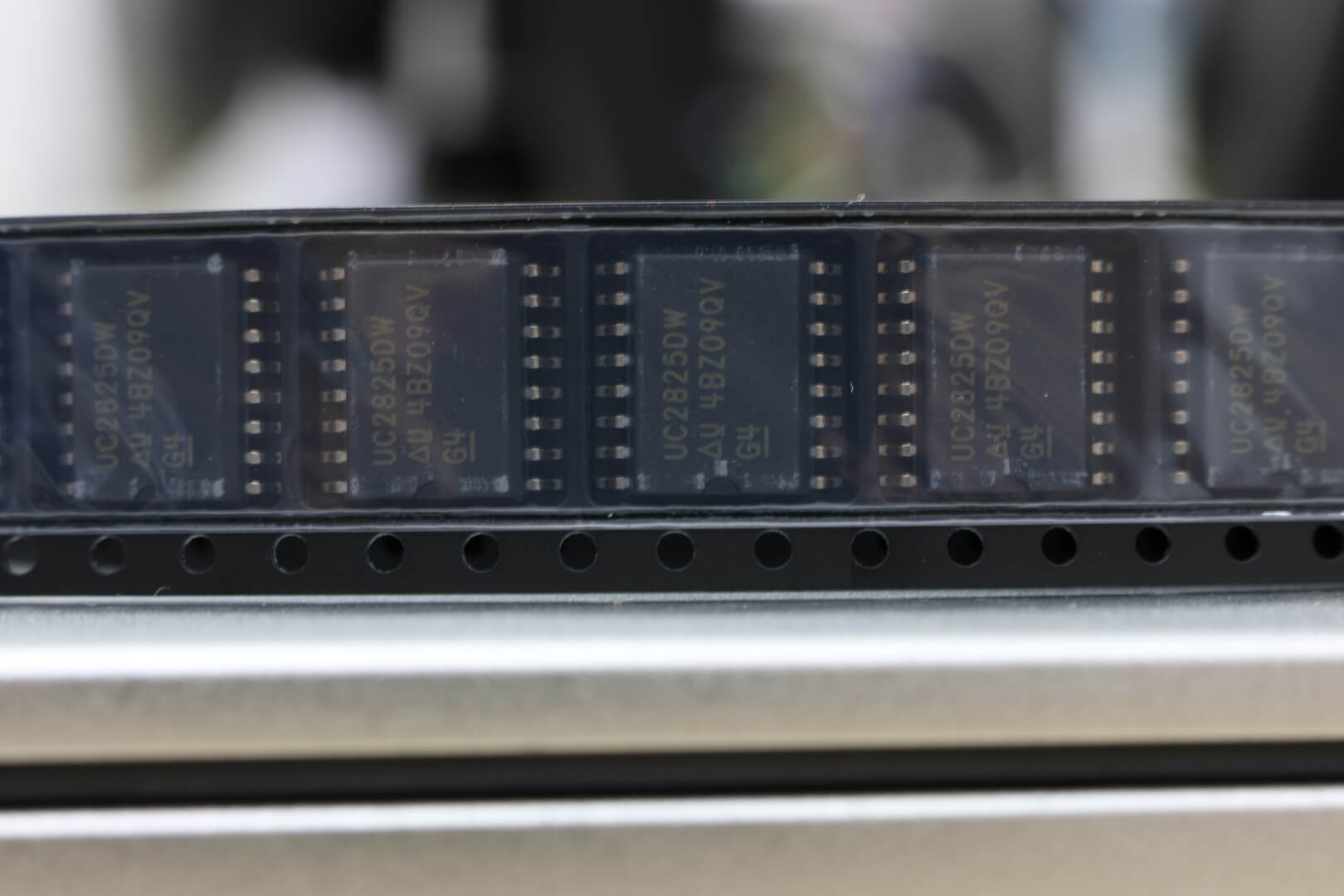
An industrial microcontroller is a microcontroller built for control tasks in harsh or mission-critical environments, such as factory automation, motor control, and connected embedded systems, particularly in industrial settings. Compared with consumer MCUs, industrial-grade parts like those based on ARM® Cortex provide more weight on reliability, deterministic timing, wider temperature operation, and long-term availability. They are often used where even a brief fault could stop a production line or create a safety issue.
The biggest difference is not just performance, but consistency. Consumer MCUs may be perfectly fine for wearables or hobby projects, but industrial MCUs, such as those based on ARM® Cortex-M7, are expected to deliver real-time control under electrical noise, vibration, and long duty cycles. That is why industrial systems often pair them with PLC architectures, industrial networking, and strict validation requirements for controllers.
Key Features of Industrial Microcontrollers
Industrial MCUs usually support extended temperature ranges, commonly around -40°C to +85°C or higher, so they keep operating in hot cabinets, enclosed machinery, and outdoor equipment. They also need stronger EMI resistance because motors, relays, inverters, and long cable runs can introduce significant noise, impacting the capability of the system.
Real-time processing is another core requirement because automation tasks depend on predictable interrupt handling and timing. Communication support is equally important, especially for CAN Bus, Modbus, RS-485, and sometimes Ethernet, which are widely used for machine-to-machine coordination in industrial applications. Low power consumption still matters in many IoT nodes and battery-backed systems, but in most automation hardware, it is secondary to reliability and interface support.
Industrial Microcontroller Applications
Factory automation is one of the most common use cases, where 32-bit MCUs handle sensors, actuators, interlocks, and local decision-making. In PLC systems, they help execute deterministic control logic and manage input/output timing.
They are also used heavily in robotics, where motion control, feedback loops, and safety functions need fast response. Edge controllers and industrial IoT devices rely on MCUs for data acquisition, local processing, and connectivity to monitoring platforms, leveraging the capabilities of the latest ARM® processors. Motor control is another major application in industrial applications, especially for pumps, conveyors, fans, servo systems, and precision machinery, where the capability of the controller is critical.
Best Industrial Microcontrollers in 2026
The best choice depends on whether you need real-time control, ultra-low power, connectivity, or a broad embedded ecosystem. In practice, the strongest microcontroller families are the ones that combine mature tools, broad availability, and solid peripheral sets. The options below are especially relevant for automation projects in 2026.
STM32 Series
STM32 has effectively become the default choice for many midrange control systems because of its balance between peripheral support, pricing, and long-term ecosystem stability. Its ARM Cortex-M family is mature, and many STM32 parts include timers, ADCs, PWM modules, CAN, UART, SPI, I2C, and, on some models, Ethernet and advanced security features. That makes STM32 a practical fit for PLC modules, motor drives, instrumentation, and connected control boards.
For many engineering teams, STM32 is the safest all-around option because it scales well from simple controllers to more capable networked devices without forcing a platform change in industrial applications. It is especially useful when a project needs dependable real-time behavior and a broad peripheral mix for high-performance applications. In many factory equipment designs, STM32 is not just a good option; it is the reference point other MCUs and controllers are compared against.
Texas Instruments MSP430
MSP430 is best known for ultra-low power rather than high throughput, but it still has an important role in embedded control systems. It is a strong fit for sensor nodes, battery-powered instrumentation, and simple control tasks where energy efficiency matters in industrial applications. In production environments, that can translate into long maintenance intervals and stable operation in power-sensitive designs, especially when using scalable solutions like TI's microcontrollers.
The MSP430 is less common for heavy robotics or complex automation controllers than STM32-class microcontrollers, but it can be excellent for support functions in automotive applications. Use it when the design needs low power, simple real-time logic, and a proven embedded ecosystem for high-performance microcontrollers, such as those offered by Microchip. For distributed sensing and auxiliary control in industrial settings, it remains a practical choice.
NXP LPC / Kinetis
NXP's LPC and Kinetis families are well suited to systems that need strong connectivity and reliable real-time performance. These MCUs are often used in control systems, communications-heavy modules, and embedded devices that need a balanced mix of processing and peripherals, including analog converters for enhanced capability. They are a good fit when the platform needs robust interrupt handling and a stable software base.
NXP's portfolio is attractive for teams that care about high performance, networking, and design continuity in automotive microcontroller applications. In automation hardware, that can be useful for human-machine interfaces, edge controllers, and machine networking modules. They are worth considering when long-term support and industrial behavior matter as much as raw speed.
Arduino Industrial 101
Arduino Industrial 101 is more of a development-oriented edge board than a pure MCU family, but it still matters in prototyping and lightweight deployments. Teams often use it when they want a fast path from proof of concept to connected sensing or basic control logic. For early-stage projects, that can save time during evaluation and bring up.
That said, it is not usually the first choice for long-life, high-volume production hardware. It is better seen as a bridge between experimentation and a more formal embedded platform. In mature deployments, most teams eventually move to a more standard MCU family with clearer lifecycle support, particularly those that offer scalable solutions for industrial applications.
ESP32 for Industrial IoT
ESP32 is popular in IoT because it combines wireless connectivity, solid general-purpose performance, and a very large developer ecosystem. It works well for wireless monitoring nodes, remote telemetry, dashboard devices, and cloud-connected equipment. For connected sensing and non-critical control, its value is hard to beat on cost and features, especially with scalable ARM® solutions.
The trade-off is that ESP32 is stronger as a connectivity layer than as the core of a demanding control loop. It can be a good fit for industrial IoT, but it is less ideal for deterministic motor-control tasks where timing jitter and EMI tolerance become critical. In long-life products, teams should also pay close attention to power integrity, firmware quality, and product availability before committing to it.
How to Choose the Right Industrial MCU
Start with processing performance. If you are handling motion control, multiple control loops, or protocol bridging, you need enough headroom for deterministic execution. Next, check connectivity requirements, because the best MCU for a sensor node may not be right for a PLC or gateway.
Temperature range and reliability are essential if the device will run in a cabinet, near motors, or outdoors. Long-term availability of microcontrollers matters just as much, since automation products often stay in production for many years. Finally, look for industrial certifications or compliance requirements tied to your system, especially if the design is safety-related or deployed in regulated environments.
Where to Buy Industrial Microcontrollers
Authorized distributors are often the first choice for standard procurement because they provide traceable supply chains, current documentation, and direct manufacturer support. However, independent distributors also play an important role in industrial electronics, especially when sourcing obsolete components, managing allocation shortages, or locating hard-to-find parts for long-lifecycle systems.
For industrial automation projects, supply chain flexibility can be just as important as technical specifications. A reliable sourcing partner should be able to verify inventory quality, date codes, packaging history, and component authenticity while helping manufacturers maintain production continuity. In embedded systems and factory automation, strong procurement planning can reduce redesign risk, avoid production delays, and improve long-term component availability.
Common Questions About Industrial Control Hardware
Which microcontroller is best for industrial automation?
For most automation projects, STM32 is one of the safest all-around choices because it offers a broad range of performance levels, mature tools, and strong peripheral support. If the project is very low power, an MSP430 processor may be better. If wireless industrial IoT is the priority, the ESP32 microcontroller is often the practical pick.
What is the difference between industrial and consumer MCUs?
Industrial MCUs are designed for harsher conditions, longer lifecycles, and more predictable real-time behavior. Consumer MCUs are often optimized for cost and convenience, while industrial parts emphasize reliability, temperature tolerance, noise immunity, and supply continuity. In automation, that difference can be the line between stable operation and frequent failures in industrial applications involving microcontrollers.
Which communication protocols are used in industrial systems?
Common protocols include CAN Bus, Modbus, and RS-485, along with UART, SPI, I2C, and in some systems Ethernet-based networking. The right choice depends on speed, distance, noise tolerance, and how the device fits into the control architecture, especially when integrating edge AI capabilities. Many industrial MCUs support several of these interfaces at once.
Can ESP32 be used in industrial IoT?
Yes, ESP32 can be used in industrial IoT, especially for wireless monitoring, telemetry, and connected edge devices. It is a strong value option because of its connectivity and ecosystem. For harsh environments or long-lifecycle control products, though, reliability, EMI behavior, and availability of high-performance microcontroller components should be validated carefully.
Building Reliable Embedded Systems for Automation
Choosing the right MCU depends on reliability, communication support, lifecycle availability, and how demanding the control task really is. Industrial automation works best when the hardware platform is stable, well supported, and aligned with long-term supply needs.
For most automation systems in 2026, STM32 is the strongest general-purpose choice, MSP430 is useful for low-power sensing, NXP LPC/Kinetis fits connected control, and ESP32 is a strong option for industrial IoT. For production programs, the real decision is not only technical; long-term availability, sourcing stability, and lifecycle support for ARM® Cortex-based chips matter just as much as the chip itself.
Related Information

- Help you to save your cost and time.

- Reliable package for your goods.

- Fast reliable delivery to save time.

- Quality premium after-sale service.


