 susan@shin-yua.com
 My inquiry
 My Account
 Upload BOM
Logic Chip: The Layer Where Modern Computing Actually Breaks or Scales
There's a moment most engineers run into-usually not in theory, but in a real project-when the conversation shifts from "which chip is faster" to something much less comfortable:
"Did we choose the wrong logic chip architecture from the beginning?"
I've seen this happen more than once. Systems that looked solid on paper-good specs, decent benchmarks-ended up underperforming in production. Not because the hardware was bad, but because the logic chip didn't match how the workload actually behaved.
That's when you realize something important:
a logic chip isn't just executing instructions anymore-it's defining the boundaries of the entire system.
For a baseline definition, Wikipedia still describes logic chips in terms of circuits and computation. But in practice today, that definition barely scratches the surface.
The Logic Chip Quietly Became the System Center
What changed over the past few years isn't just performance-it's where decisions are made.
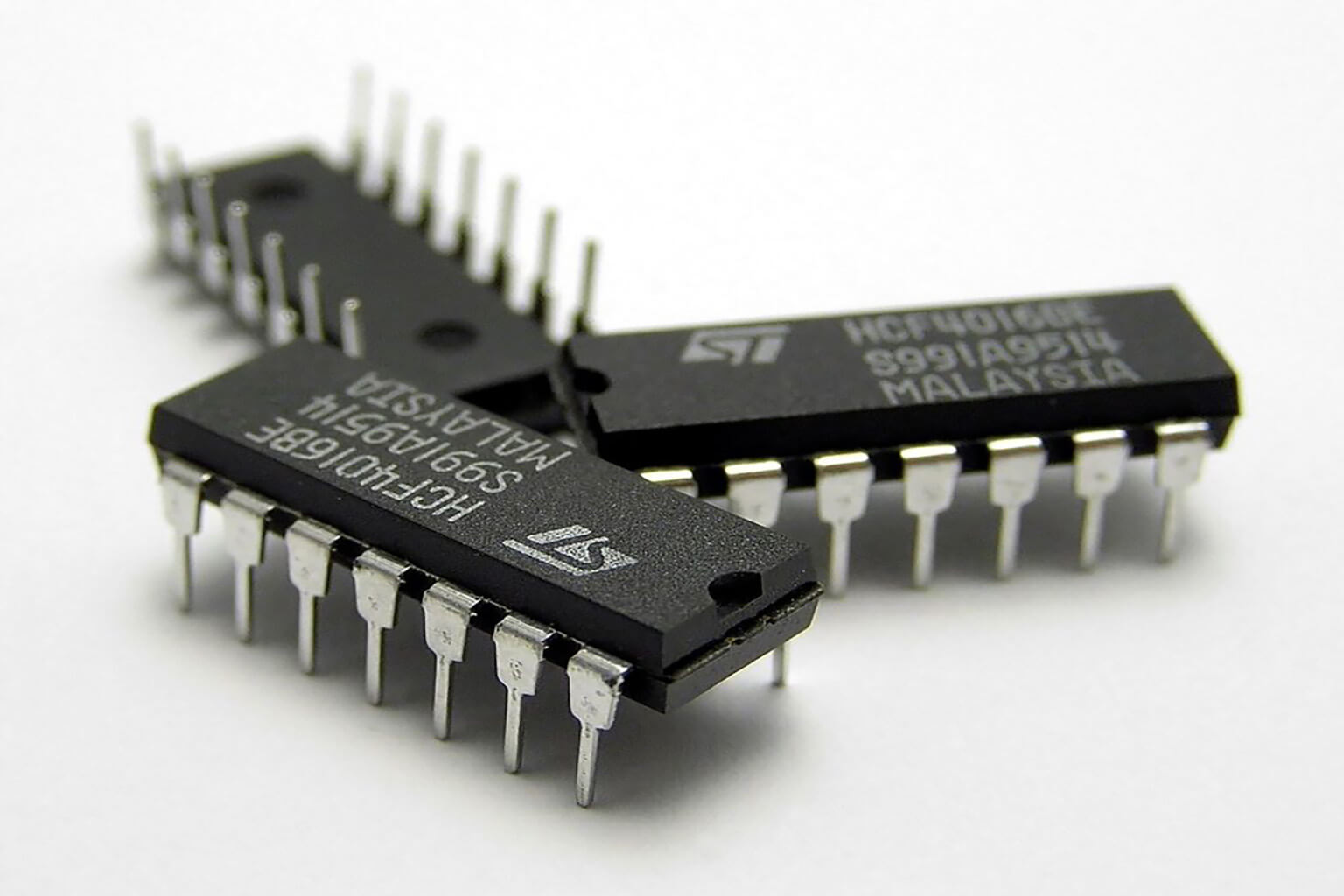
Why System Design Now Starts with Logic Chips
In older system designs, the processor was one piece of a larger puzzle. You could design around it, swap it later, or compensate for its weaknesses elsewhere.
That flexibility is mostly gone.
Today, once a logic chip is selected, it begins to shape everything around it-how data moves, how memory is accessed, how latency behaves under pressure. Even thermal design starts to follow from that choice.
I've worked on projects where teams tried to "fix things later" after choosing a chip. In reality, they were just working around a constraint that had already been locked in.
The Role of Component Distribution in Real Decisions
This is something that doesn't get discussed enough: how sourcing influences architecture.
When you're browsing through a distributor like Shin-Yua, you're not just picking parts-you're narrowing down architectural possibilities. Availability, lifecycle status, and ecosystem compatibility all start influencing what's realistically deployable.
you'll notice something subtle: everything is organized around how components fit into systems, not just what they are individually. And logic chips sit at the center of that structure.
Why General-Purpose Logic Chips Are No Longer the Default
There was a time when CPUs could handle almost everything. That assumption doesn't hold anymore.
The Real Limitation of Flexibility
Processors from Intel are incredibly capable, but they were designed for versatility. Modern workloads-especially AI-don't need versatility. They need repetition and scale.
I've seen CPU-heavy systems that look busy in monitoring dashboards but fail to deliver meaningful throughput. The issue isn't utilization-it's alignment.
The chip is working, but it's not working on the right kind of work.
Why Specialized Logic Chips Feel Different in Practice
When you move to GPUs from NVIDIA, the difference isn't just measurable-it's obvious.
Workloads that struggled before suddenly flow naturally. Not because the chip is magically faster, but because it's built for that exact pattern of computation.
Then you look at what Google has done with custom logic chips, and the trend becomes even clearer. The industry is moving toward removing everything unnecessary, leaving only what directly contributes to execution.
That's a very different philosophy from traditional computing.
The Bottleneck Isn't Compute - It's Everything Around It
One of the most common mistakes I still see is over-focusing on compute specs.
In reality, performance problems usually show up somewhere else.
When Logic Chips Spend Time Waiting
A logic chip can only process data it has. If data arrives late-or in the wrong format-it doesn't matter how powerful the chip is.
I've worked on systems where upgrading the logic chip made almost no difference. The bottleneck was memory bandwidth. The chip simply couldn't get data fast enough to stay busy.
Research from IEEE has been pointing this out for years, but it hits differently when you see a high-end system underperform for this exact reason.
Why System Context Matters More Than Chip Specs
This is where a lot of component selection processes fall short.
Looking at logic chips in isolation-frequency, cores, performance numbers-only tells part of the story. What really matters is how the chip interacts with everything around it.
When sourcing components, whether through distributor catalogs or manufacturer pages, the more useful question isn't "how powerful is this logic chip," but rather:
"What kind of system does this chip force me to build?"
Inference Workloads Changed the Priorities
There's a tendency to focus on AI training, but in real deployments, inference dominates.
What Actually Happens After Deployment
Once a model is trained, it gets used-constantly. Requests come in continuously, and each one requires a response within strict latency constraints.
Organizations like OpenAI have emphasized how dominant inference has become in production environments.
From an engineering perspective, this changes what matters.
Why Efficiency Overtakes Raw Performance
In these environments, peak performance becomes less relevant than consistent, efficient performance.
I've seen systems where reducing precision-switching to INT8 or FP16-delivered better real-world results than increasing raw compute power. Not because the chip got stronger, but because it became more efficient under sustained load.
For deeper technical context, platforms like NVIDIA's developer resources go into detail on how these optimizations work in practice.
Power and Heat Are Now First-Class Constraints
One thing that feels very different today is how early power considerations enter the conversation.
When Logic Chips Become Thermal Limits
High-performance logic chips now push systems into thermal boundaries very quickly. And once you hit that limit, performance gains stop mattering.
The question shifts from capability to sustainability:
can the system actually maintain this level of performance over time?
Organizations like The Green Grid formalize this through efficiency metrics, but in real-world projects, you feel the constraint long before you measure it.
Cooling Is Part of the Architecture Now
Cooling used to be something you figured out later. That approach doesn't work anymore.
From what I've seen, thermal design decisions often trace directly back to the logic chip. Choose a high-performance chip, and you inherit a set of cooling requirements that may fundamentally change your system design.
In some cases, the "best" logic chip simply isn't viable once thermal constraints are considered.
Logic Chip Is Where Systems Succeed or Fail
If I had to reduce all of this into one observation, it would be this:
"The logic chip is no longer something you optimize-it's something you commit to."
Everything else follows from that decision:
how data flows, how efficiently the system runs, how scalable it becomes, and how much it ultimately costs to operate.
And once you've worked on enough real systems, you stop seeing logic chips as interchangeable parts.
You start seeing them for what they really are:
"the point where theory meets reality-and where most systems quietly succeed or fail."
Related Information

- Help you to save your cost and time.

- Reliable package for your goods.

- Fast reliable delivery to save time.

- Quality premium after-sale service.


