 susan@shin-yua.com
 My inquiry
 My Account
 Upload BOM
What is an Integrated Circuit?
Introduction to Integrated Circuits
When I look at an integrated circuit, I don't see a "chip" in the casual sense-I see a densely packed, highly orchestrated network of semiconductor devices, all etched into silicon with nanometer precision. An integrated circuit is not just a component; it is the result of decades of process engineering, device physics, and circuit design converging into a single, manufacturable unit.
In real systems, ICs define capability. Whether you are designing an embedded controller, debugging a timing issue, or sourcing parts for production, the integrated circuit you choose dictates performance ceilings, power profiles, signal integrity, and even system reliability over time. For buyers, this is where confusion often starts: the part number looks simple, but the implications behind it are not.
Definition of an Integrated Circuit
Technically speaking, an integrated circuit is a monolithic semiconductor device that integrates active and passive components-transistors, resistors, capacitors-onto a single silicon die. These elements are interconnected through multiple metal layers, forming logic gates, analog blocks, memory arrays, or timing circuits.
What matters in practice is not just the definition, but the scale and density. Modern ICs can integrate billions of transistors, but even simpler devices-like timing ICs or power regulators-are engineered with careful attention to parasitics, leakage currents, and thermal behavior. Every layout decision, every doping profile, directly affects how the circuit behaves under real operating conditions.
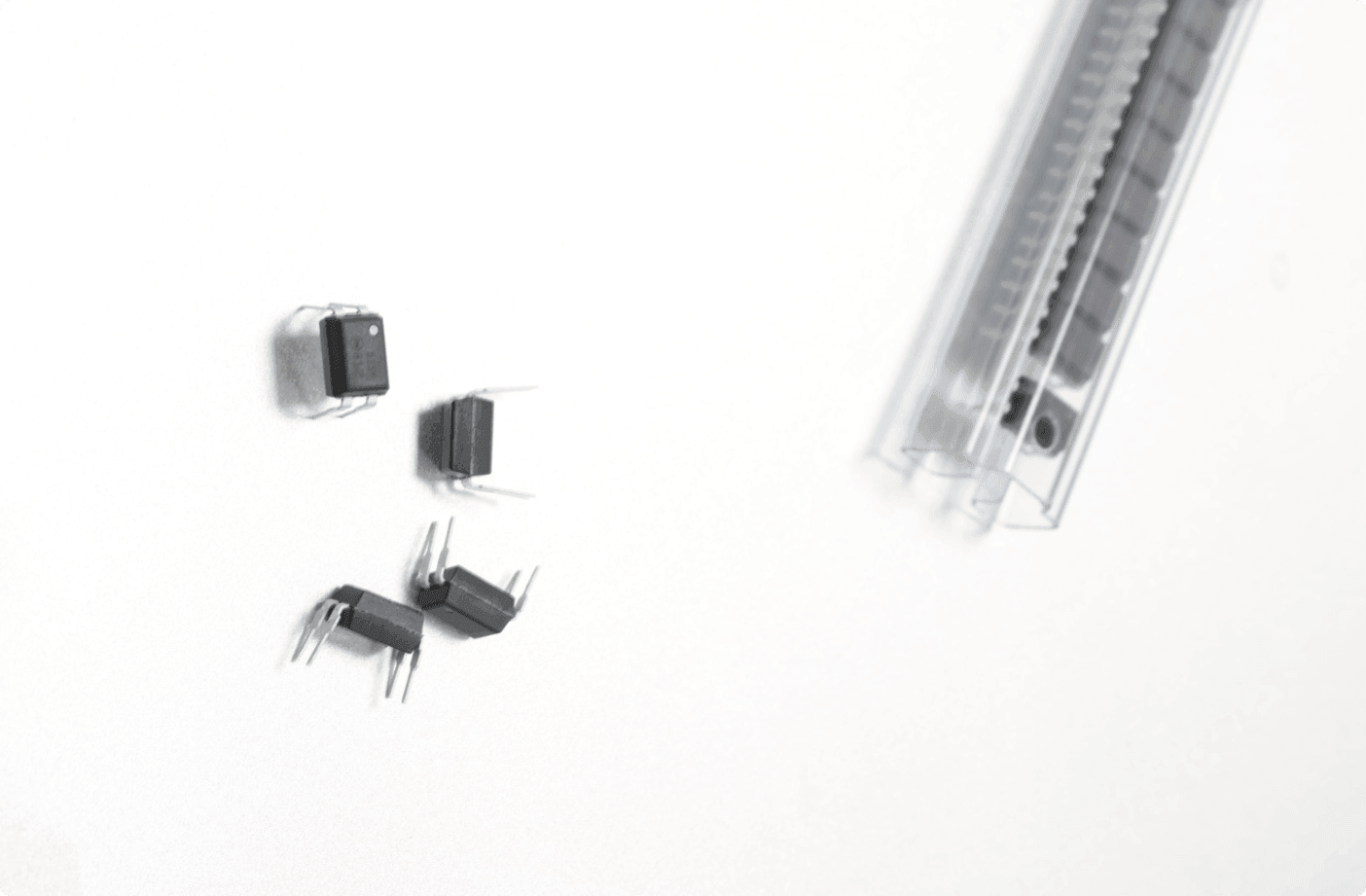
Why Integrated Circuits Are Important
Integrated circuits eliminated the inefficiencies of discrete design. Before ICs, engineers wired individual components together, dealing with noise, size constraints, and failure points at every connection. Integration changed that completely. It reduced interconnect length, minimized parasitic effects, and dramatically improved reliability.
From a system perspective, ICs enable determinism. They allow designers to predict timing, control power consumption, and scale functionality. In procurement terms, they also standardize complexity-what used to require dozens of components is now a single part number. That simplicity on the surface is exactly why buyers need to understand what sits underneath.
How Integrated Circuits Work
Basic Components Inside an IC
At the device level, everything revolves around the transistor-primarily MOSFETs in modern CMOS processes. These transistors switch, amplify, and regulate signals. Around them, resistive elements shape current flow, capacitive structures store charge, and interconnect layers route signals across the die.
But what really defines behavior is not the components themselves-it's how they are arranged. Layout engineers fight parasitic capacitance, electromigration, and cross-talk. Process engineers tune oxide thickness and channel doping. The result is a structure where electrical behavior is tightly controlled, even under voltage variation and temperature drift.
How Signals Are Processed
Signal processing inside an IC is fundamentally about controlling charge and timing. In digital circuits, transistors toggle between defined voltage thresholds, creating logic states. In analog circuits, those same devices operate in linear regions, shaping continuous waveforms.
Timing becomes critical here. Clock signals propagate through buffers, phase-locked loops stabilize frequency, and synchronization circuits prevent metastability. A device like the NB2669ASNR2 from onsemi, for example, exists purely to manage timing-generating a stable clock so that the rest of the system doesn't drift into unpredictable behavior. When timing fails, the entire system becomes unreliable, regardless of how good the rest of the design is.
Types of Integrated Circuits
Analog vs Digital ICs
The distinction between analog and digital ICs is not just academic-it reflects fundamentally different design philosophies. Digital ICs prioritize switching speed, noise margins, and logic density. Analog ICs, on the other hand, are sensitive to noise, linearity, gain, and bandwidth.
In practice, most real systems are mixed-signal. You sample an analog signal, digitize it, process it, and then convert it back or act on it. This interaction is where design complexity increases, and where component selection becomes more nuanced.
Common IC Categories
From a sourcing standpoint, ICs are usually grouped by function. Microcontrollers integrate processing cores, memory, and peripherals. Memory ICs focus on storage density and access speed. Power management ICs regulate voltage rails and handle load transients.
Then there are timing ICs-often underestimated, but critical. Clock generators, oscillators, and PLL-based devices ensure synchronization across subsystems. If you have ever seen a system fail intermittently under temperature variation, there is a good chance timing instability was involved. That is why even relatively simple timing ICs remain essential in embedded and industrial designs.
Applications of Integrated Circuits
Consumer Electronics
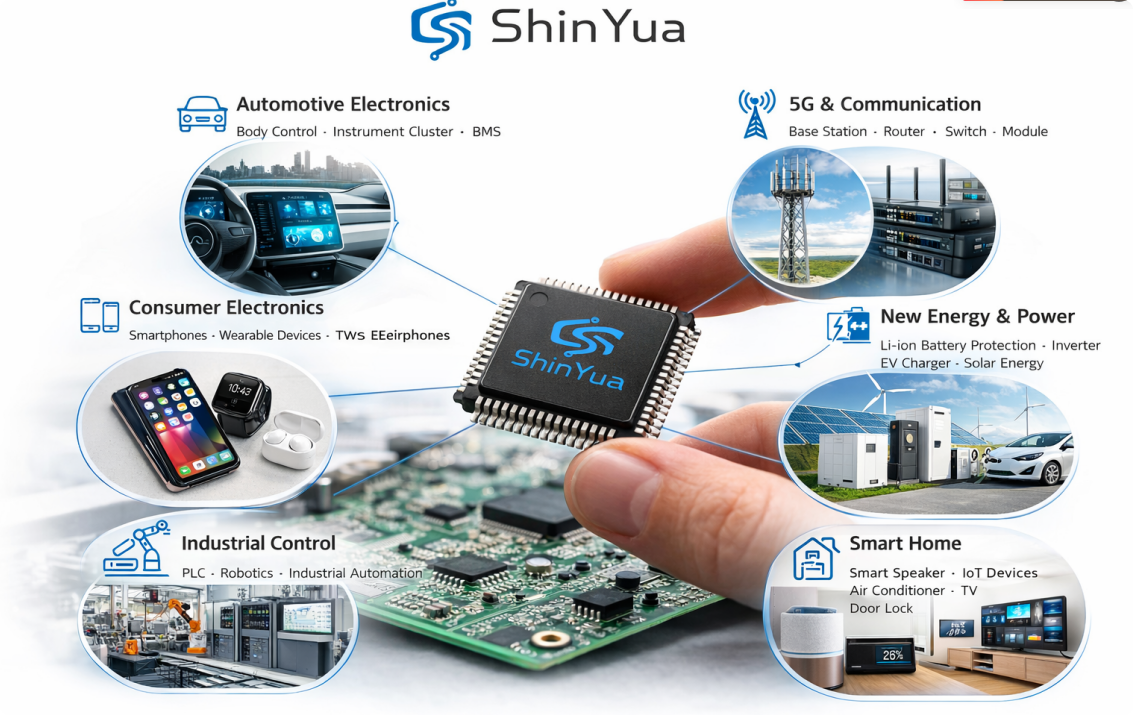
In consumer devices, ICs are pushed toward high integration and low power. System-on-chip (SoC) designs combine CPU cores, GPUs, memory controllers, and interfaces into a single package. The challenge here is thermal density and power efficiency-every milliwatt matters.
Industrial and Automotive Systems
Industrial and automotive environments shift the focus toward robustness. Components must tolerate voltage spikes, temperature extremes, and long operational lifetimes. Here, reliability metrics, derating strategies, and failure modes become more important than raw performance.
Communication and Networking
In communication systems, signal integrity dominates. High-frequency operation introduces jitter, phase noise, and impedance matching challenges. Clock distribution, again, becomes critical. A marginal clock signal can degrade an entire data link, increasing bit error rates and reducing system throughput.
Advantages and Limitations of Integrated Circuits
Key Advantages
From an engineering standpoint, the advantages of ICs are rooted in integration. Shorter interconnects reduce parasitic inductance and capacitance. Controlled fabrication improves matching between components. Mass production lowers cost per function.
There is also a reliability advantage. Fewer solder joints, fewer discrete connections-fewer points of failure. When designed correctly, an IC can operate for years with minimal drift, provided it stays within its electrical and thermal limits.
Limitations
But integration comes with trade-offs. Heat density becomes harder to manage as more functionality is packed into a smaller area. Once fabricated, the design is fixed-you cannot tweak a resistor value or reroute a signal. And when a failure occurs, you replace the entire device, not a single element.
Obsolescence is another practical limitation. Components like the NB2669ASNR2 eventually reach end-of-life status. At that point, the challenge is no longer technical-it becomes logistical. Can you still source it? Is the inventory authentic? Do you redesign or replace?
Key Considerations When Buying Integrated Circuits
Availability and Lifecycle (EOL Issues)
From a procurement perspective, lifecycle status is often the first constraint. Engineers may specify a part that fits perfectly, only to discover it is no longer in production. This forces a decision: secure remaining stock or redesign around a newer component.
Authenticity and Supply Chain Risks
In the current semiconductor market, supply chain integrity cannot be assumed. Counterfeit components, reclaimed parts, and inconsistent quality all pose real risks. These are not theoretical concerns-they translate directly into field failures and warranty costs.
Choosing a Reliable Distributor
This is where distribution strategy becomes part of engineering. Working with a platform like ShinYua allows buyers to access fragmented global inventory while maintaining some level of quality control and traceability. More importantly, it creates optionality-if a part is unavailable, you can quickly evaluate alternatives instead of stalling production.
In practice, the best procurement decisions are not just about price or availability. They are about balancing risk, performance, and long-term sustainability. An integrated circuit may be small, but the decisions around it are not.
Related Information

- Help you to save your cost and time.

- Reliable package for your goods.

- Fast reliable delivery to save time.

- Quality premium after-sale service.


