 susan@shin-yua.com
 My inquiry
 My Account
 Upload BOM
Why STM32F405RGT6 is the King of Price-to-Performance in 64-Pin MCUs?
The Sweet Spot of High-Performance: An Overview of STM32F405RGT6
Breaking Down the Specs: 168MHz Clock and Cortex-M4 Core
The STM32F405RGT6 is built around the ARM Cortex-M4 core running at up to 168 MHz, a configuration that continues to represent a strong performance baseline for embedded systems in 2026. According to ARM Cortex-M architecture ,Cortex-M4 cores integrate DSP capability and floating-point support, making them highly efficient for real-time embedded workloads.
However, the real value of this microcontroller is not defined by clock speed alone, but by how efficiently that performance is utilized. In practice, devices in this class can reach approximately 200+ DMIPS at full frequency, placing the STM32F405 among the stronger Cortex-M4 implementations.
The Cortex-M4 architecture includes a hardware floating-point unit and DSP instruction support, which significantly improves computational efficiency compared to older Cortex-M3 devices such as the STM32F103. As a result, operations like sensor fusion, digital filtering, and control loop calculations can be executed with fewer cycles and lower latency.
This combination of clock speed and architectural efficiency is what places the STM32F405RGT6 in a practical "sweet spot." It delivers enough processing power for complex real-time tasks without introducing the overhead associated with higher-end microcontrollers.
In typical development workflows, detailed electrical characteristics, peripheral mappings, and memory organization are referenced from the STM32F405RGT6 specifications and datasheet during both schematic design and firmware implementation.
Why the LQFP64 Package is the Industrial Standard for Compact Designs
Beyond core performance, the physical package plays an important role in system design. The LQFP64 package used by the STM32F405RGT6 strikes a balance that aligns well with real-world engineering constraints.
It provides sufficient I/O for most mid-to-high complexity applications while remaining easy to route on standard multilayer PCBs. Compared to BGA packages, LQFP64 significantly reduces manufacturing complexity, inspection difficulty, and overall cost, consistent with general practices in printed circuit board design .
This is why, when engineers search for the best 64-pin MCU, devices in this package category-particularly the STM32F405-are often preferred. The package enables compact yet capable designs without forcing trade-offs in manufacturability.
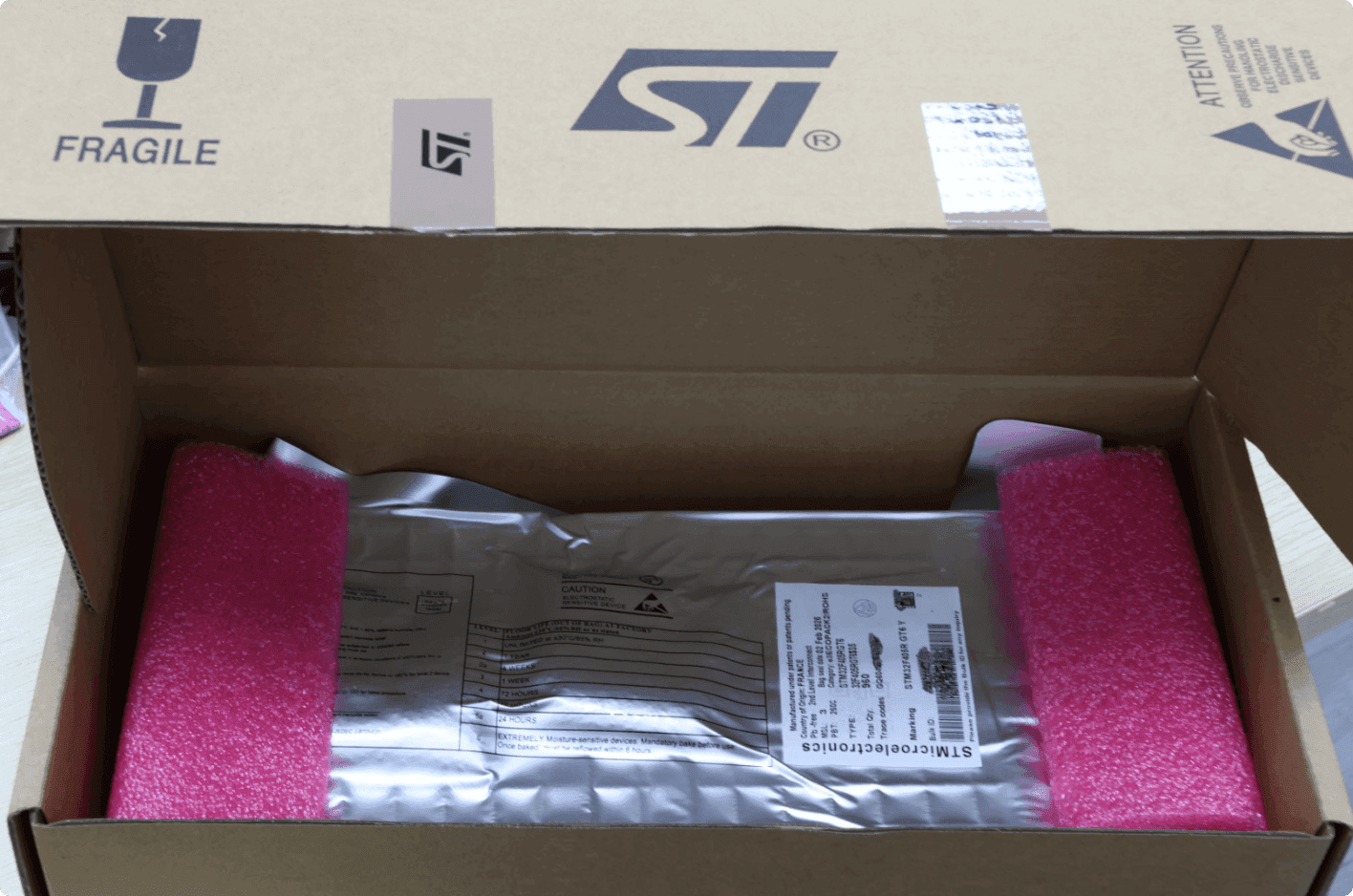
Performance Density: Why "Price-to-Performance" Favors the F405
1MB Flash and 192KB SRAM: Memory Freedom in a Small Footprint
A key factor behind the strong price-to-performance reputation of the STM32F405RGT6 is its memory configuration. With 1MB of Flash and 192KB of SRAM, it provides a level of software flexibility that is not commonly found in microcontrollers of similar cost and pin count.
This becomes especially important in modern embedded systems, where firmware often includes real-time operating systems (RTOS), communication stacks, and modular application layers. Compared to the STM32F103 series, which is much more limited in memory, the STM32F405 allows developers to design systems with fewer constraints.
Instead of spending significant effort optimizing for memory usage early in development, engineers can focus on functionality and maintainability. This directly reduces development time and improves long-term scalability. In practice, memory allocation strategies and peripheral usage are often cross-checked against the STM32F405RGT6 memory configuration details during system design.
Hardware FPU & DSP Instructions: Accelerating Complex Algorithms
The presence of a hardware floating-point unit changes how algorithms are implemented on the STM32F405RGT6. Rather than relying on fixed-point approximations, developers can use floating-point calculations directly, improving both precision and code readability.
In addition, DSP instructions enable efficient execution of operations such as filtering, transformations, and frequency-domain analysis. These capabilities are particularly valuable in applications involving continuous data processing, especially in digital signal processing (DSP).
As a result, the STM32F405 is well suited for use cases such as motor control, audio processing, and sensor data analysis, where computational efficiency directly impacts system performance.
Power Consumption vs. Processing Power: The Efficiency Winner
While higher performance often leads to increased power consumption, the STM32F405RGT6 maintains a practical balance between the two. It supports multiple power modes and clock scaling options, allowing designers to adjust energy usage based on system requirements.
Typical dynamic consumption is around 200–240 µA/MHz, which is considered efficient for Cortex-M4 class devices.
In comparison to higher-end devices like the STM32H7 series, the STM32F405 typically requires a simpler power design and generates less thermal complexity. At the same time, it still provides sufficient processing power for most real-time applications.
This balance is a major reason why it is frequently chosen for systems where both performance and energy efficiency are important considerations.
The Feature Set: More Than Just a Microcontroller
Dual CAN Bus & USB OTG: The Secret Sauce for Robotics and Drones
One of the defining advantages of the STM32F405RGT6 is its integrated communication interfaces. The inclusion of dual CAN controllers and USB OTG functionality significantly expands its application range.
The device supports Controller Area Network (CAN) and USB OTG, both of which are widely used in embedded systems for robust communication and device interaction.
In systems such as robotics and drone flight controllers, reliable communication between multiple modules is essential. CAN provides robust and fault-tolerant data exchange, while USB offers flexibility for configuration, debugging, and firmware updates.
By integrating these features directly into the microcontroller, the STM32F405 reduces the need for external components, simplifying both hardware design and system architecture.
High-Speed Analog Peripherals: 12-bit ADC and DAC Capabilities
Analog performance is another area where the STM32F405RGT6 delivers strong value. Its 12-bit ADCs, combined with relatively high sampling rates (up to approximately 2.4 MSPS), enable accurate and responsive data acquisition.
This capability is important in applications that rely on real-time sensor input, such as industrial monitoring systems and embedded control devices. The role of analog-to-digital converters (ADC) is critical in determining signal quality and system responsiveness.
The ability to handle analog signals internally also reduces system cost by eliminating the need for external ADC components.
Advanced Timers for Precision PWM and Motor Control (FOC)
The timer subsystem of the STM32F405RGT6 is specifically designed to support precise timing and control requirements. Advanced timers enable high-resolution PWM generation, which is critical for motor control applications.
In field-oriented control systems, timing precision directly affects efficiency, stability, and overall performance. Techniques such as field-oriented control (FOC) rely heavily on accurate PWM timing.
The STM32F405 provides the necessary features to implement these control strategies effectively, without relying on dedicated external controllers.
Head-to-Head Comparison: Why F405 Outshines the Competition
STM32F405 vs. STM32F103: Is the Upgrade Worth the Cost?
When comparing the STM32F405 to the STM32F103, the difference goes beyond a simple performance increase. The STM32F405 introduces a more advanced core, larger memory, and a significantly richer peripheral set.
The STM32F103, while still widely used in low-cost designs, lacks a hardware floating-point unit and is more limited in both memory and processing capability. This makes it less suitable for modern embedded applications that require real-time processing and scalability.
STM32F405 vs. STM32F407: Performance Without the Extra Bulk
The STM32F407 shares the same Cortex-M4 core and similar performance characteristics as the STM32F405, but includes additional peripherals such as Ethernet and camera interfaces.
However, these features are not always required. In applications where Ethernet or advanced imaging interfaces are unnecessary, the STM32F405 provides nearly identical processing capability with lower cost and reduced system complexity.
Why it Holds Its Own Against Newer Cortex-M7 (H7) Series
The STM32H7 series offers higher raw performance due to its Cortex-M7 core and higher clock speeds. However, this increased capability comes with trade-offs, including higher power consumption and more complex hardware requirements.
In many embedded applications, the additional performance is not fully utilized. The STM32F405RGT6 remains competitive because it delivers sufficient performance for real-world workloads without introducing unnecessary complexity.
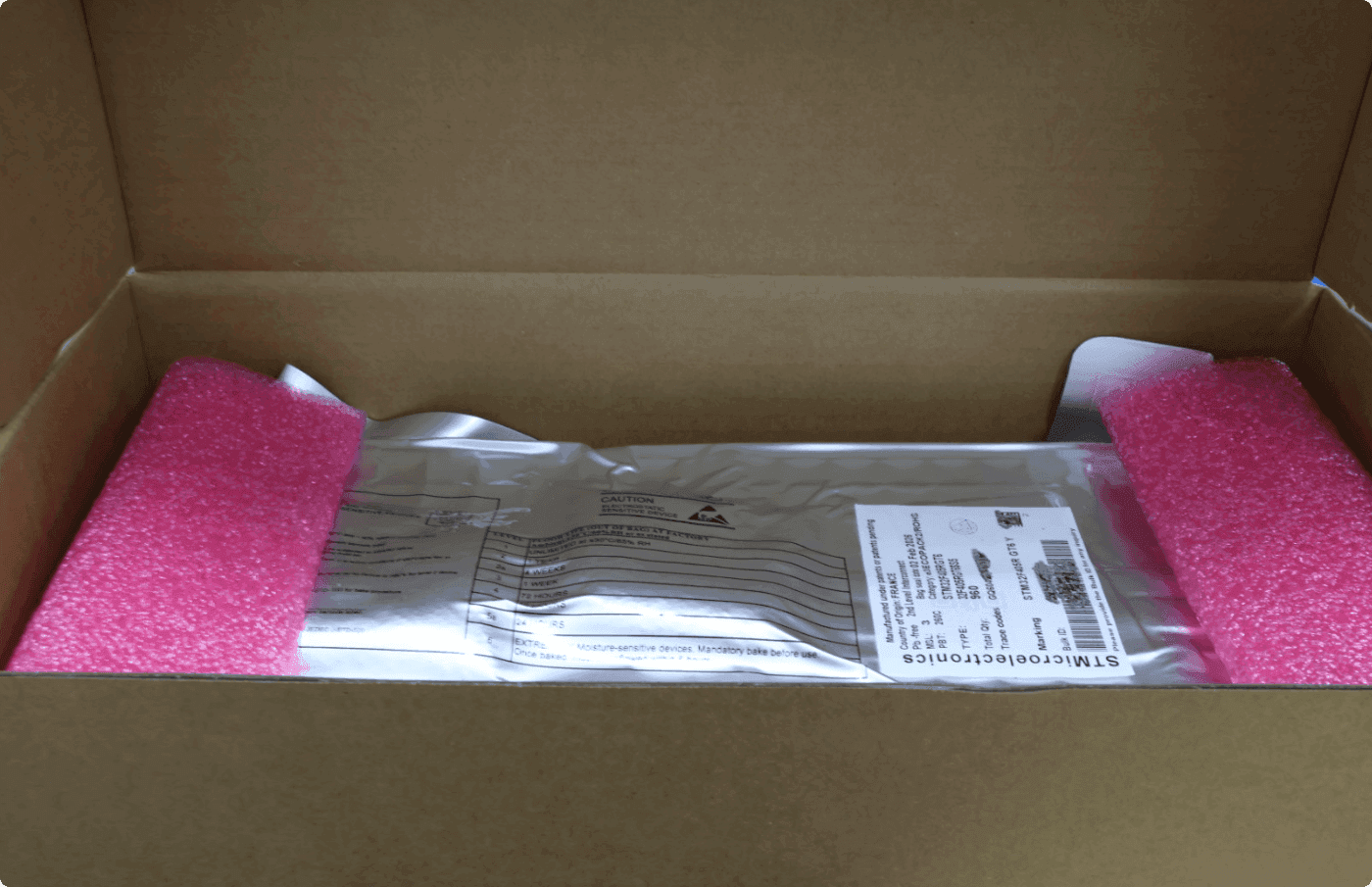
Real-World Applications: Where the "King" Wears the Crown
Flight Controllers: The Heart of Professional Drones
The STM32F405RGT6 is widely used in drone flight controllers due to its ability to process sensor data quickly and maintain stable control loops. Its performance and peripheral integration make it suitable for demanding real-time environments.
Industrial Automation: Reliable Performance in Harsh Environments
In industrial systems, reliability and predictability are critical. The STM32F405 provides stable operation and is supported by a mature ecosystem, making it well suited for control systems, motor drives, and data acquisition applications.
Smart Consumer Electronics: From Audio Processing to Handheld Gimbals
In consumer electronics, achieving the right balance between cost and performance is essential. The STM32F405RGT6 enables feature-rich designs without significantly increasing system cost, making it suitable for applications such as audio processing and stabilization systems.
Engineering Best Practices: Designing with STM32F405RGT6
PCB Layout Tips for High-Speed USB and Analog Signal Integrity
Effective PCB design is important when working with the STM32F405, particularly in systems that combine high-speed digital interfaces and sensitive analog signals.
Proper routing techniques, controlled impedance for USB, and clear separation between analog and digital domains help ensure stable system performance.
Software Ecosystem: Leveraging STM32CubeMX and HAL Libraries
The STM32 ecosystem provides a comprehensive set of development tools, including STM32CubeMX and HAL libraries, which simplify configuration and reduce development time.
For broader supply chain evaluation and component sourcing considerations, engineers often reference electronic components sourcing platforms when selecting parts for production.
Conclusion: Is the STM32F405RGT6 Still the Best Choice in 2026?
The STM32F405RGT6 continues to deliver a well-balanced combination of performance, integration, and cost efficiency. It provides enough capability for modern embedded systems while avoiding the complexity associated with higher-end devices.
For engineers looking for a reliable and scalable 64-pin microcontroller, it remains one of the most practical and competitive options available in 2026.
FAQ: STM32F405RGT6 Selection and Application Insights
1. Is STM32F405RGT6 still a good choice in 2026?
Yes, the STM32F405RGT6 remains a practical choice for many embedded systems in 2026. While newer microcontrollers offer higher clock speeds and more advanced features, the F405 continues to provide a well-balanced combination of performance, memory, and peripheral integration.
For applications such as motor control, drones, and industrial systems, its Cortex-M4 core with FPU is still sufficient, especially when system efficiency and design simplicity are priorities.
2. What is the difference between STM32F405 and STM32F407?
The STM32F405 and STM32F407 share the same Cortex-M4 core and similar performance characteristics. The main difference lies in additional peripherals.
The STM32F407 includes interfaces such as Ethernet MAC and camera support, which are not available on the F405. If these features are not required, the STM32F405 is often preferred due to lower cost and reduced system complexity.
3. When should you choose STM32F405 over STM32H7?
The STM32F405 is a better choice when the application does not require extreme processing performance.
Compared to the STM32H7 series, the F405 offers simpler power design, lower power consumption, and easier PCB layout. For most real-time control systems, embedded communication devices, and mid-range signal processing tasks, the performance of the F405 is already sufficient.
Choosing an H7 device is typically justified only when high-speed computation, large memory bandwidth, or advanced graphics/AI workloads are required.
4. What are the common applications of STM32F405RGT6?
The STM32F405RGT6 is widely used in applications that require reliable real-time performance and integrated peripherals.
Typical use cases include drone flight controllers, industrial automation systems, motor control solutions, audio processing devices, and embedded communication systems. Its combination of DSP capability, memory size, and communication interfaces makes it suitable for both control and data processing tasks.
5. Does STM32F405 support RTOS-based development?
Yes, the STM32F405RGT6 is well suited for RTOS-based systems.
With 192KB of SRAM and hardware support for efficient interrupt handling, it can run popular real-time operating systems such as FreeRTOS smoothly. This makes it a strong candidate for applications that require task scheduling, real-time responsiveness, and modular firmware design.
Related Information
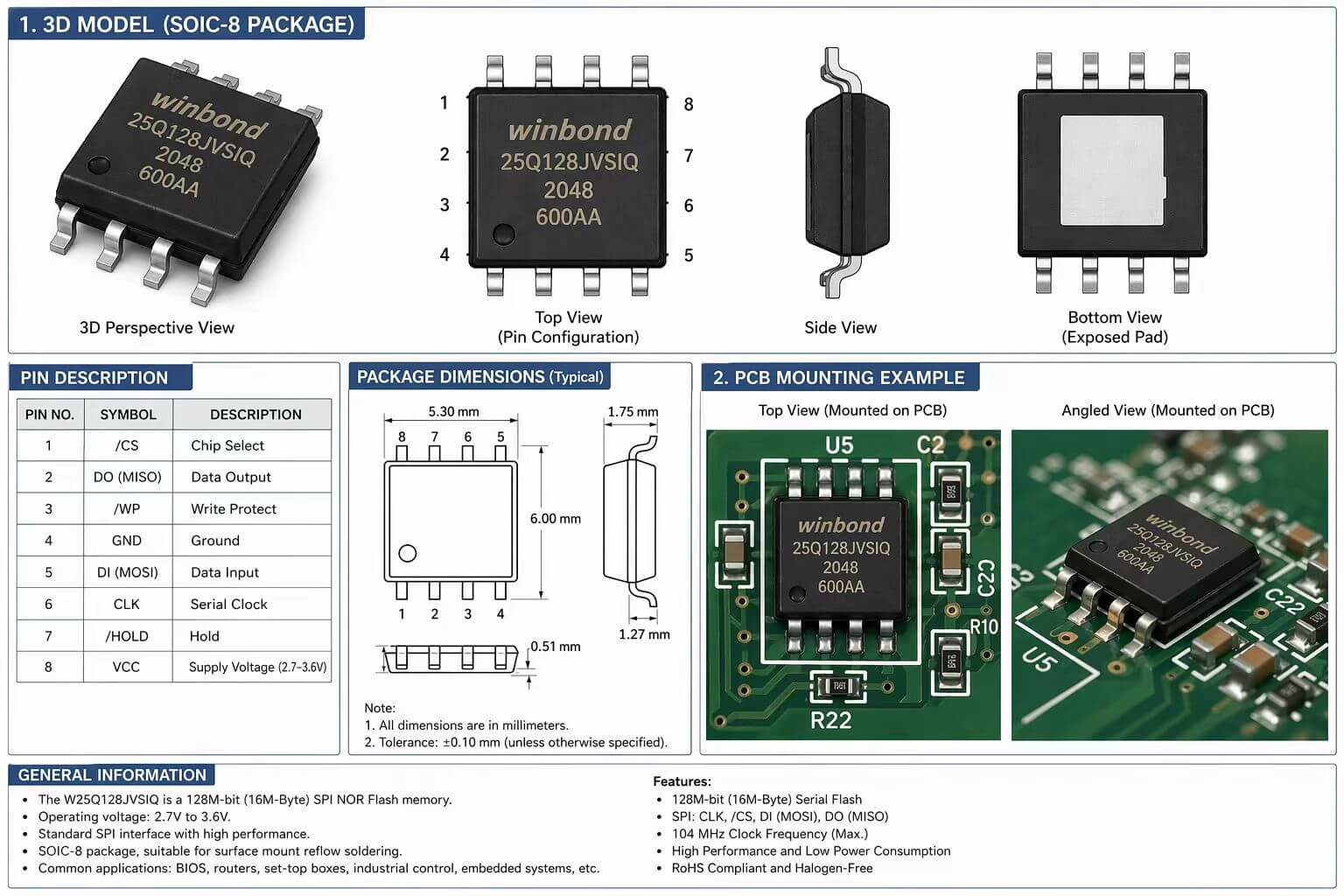

- Help you to save your cost and time.

- Reliable package for your goods.

- Fast reliable delivery to save time.

- Quality premium after-sale service.


